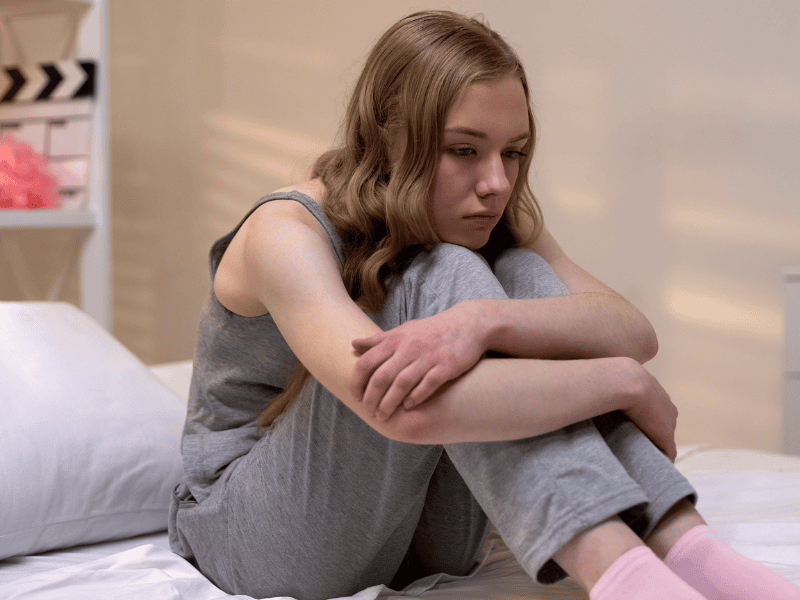
Depression isn’t one-size-fits-all. Teens may experience a range of depressive symptoms, and we aim to get to the heart of the matter so we can tailor their behavioral health treatment plan and reach an optimal outcome. Here’s a closer look at four types of depression in teens.
Seasonal Affective Disorder (SAD) is a type of depression that occurs with seasonal changes, typically in fall and winter. This is possibly due to reduced sunlight exposure. It’s important to distinguish SAD symptoms from events that occur when symptoms appear (e.g., a death in the family or holiday stress).
Major Depressive Disorder (MDD) involves severe symptoms lasting from two weeks to several months and may recur multiple times. This is the most familiar kind of depression in teens, where they often feel hopeless, lack energy, and lose interest in things they enjoy.
Depressive symptoms with Persistent Depressive Disorder (PDD) may be milder compared to MDD but last for a longer time. Symptoms may last for a year or more, so they’re often mistaken for a child’s personality or hormonal changes.
Common signs of Disruptive Mood Dysregulation Disorder (DMDD) are frequent temper tantrums and irritability, particularly in reaction to minor triggers.
It’s essential to learn what type of depression your teen experiences so we can help them in the best way possible. At Hallmark Youthcare, we explore every avenue to create an inpatient adolescent behavioral health care plan that works. Contact us today to learn more about our assessments and diagnostics.
Sources
Photo: ©Motortion via Canva.com